


ORCHESTRA OF INDIGENOUS INSTRUMENTS AND NEW TECHNOLOGIES (OIANT)
NATIONAL UNIVERSITY of ARGENTINA at TRES DE FEBRERO
CONDUCTOR: Alejandro Iglesias Rossi
DIRECTOR OF SCENIC AND VISUAL ARTS: Susana Ferreres
“Orchestra weds ancient spirituality, modern sensibility” THE JAKARTA POST Newspaper - Indonesia
“A living museum of hidden life in sound” DAILY NEWS Newspaper - South Africa
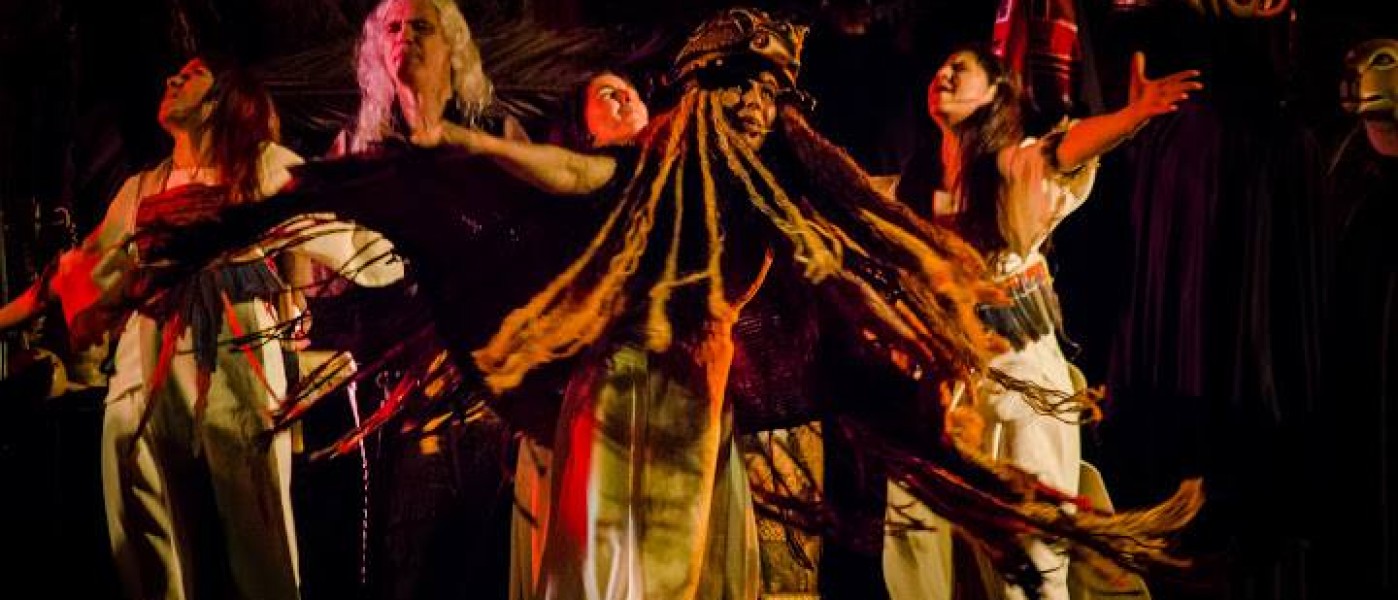
“A shamanic ritual more than a spectacle” - RADIO FRANCE
"Shamanic Sounds and Crazy Tone Clusters: Alejandro Iglesias Rossi researched extensively on the music of the indigenous people and the construction of their instruments. His work feels like you have traveled back 1000 years and you are in a strange ceremony celebrating the connections of the culture with the Earth" - THE NEW YORK TIMES
Presentation
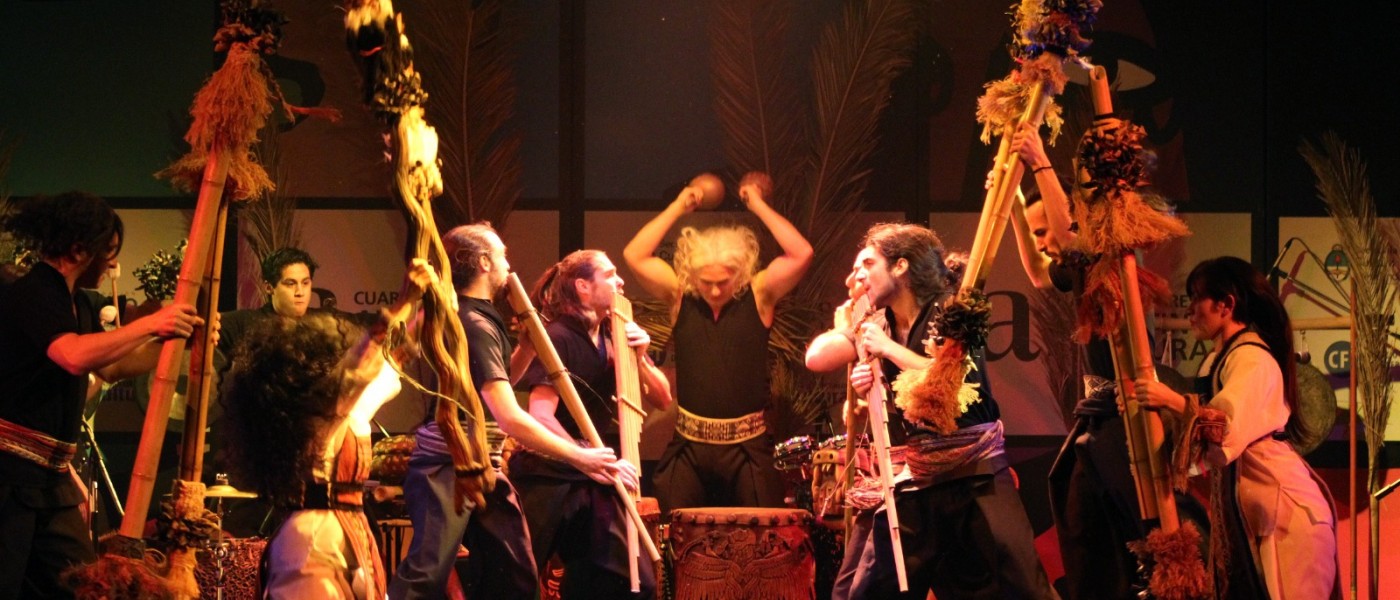
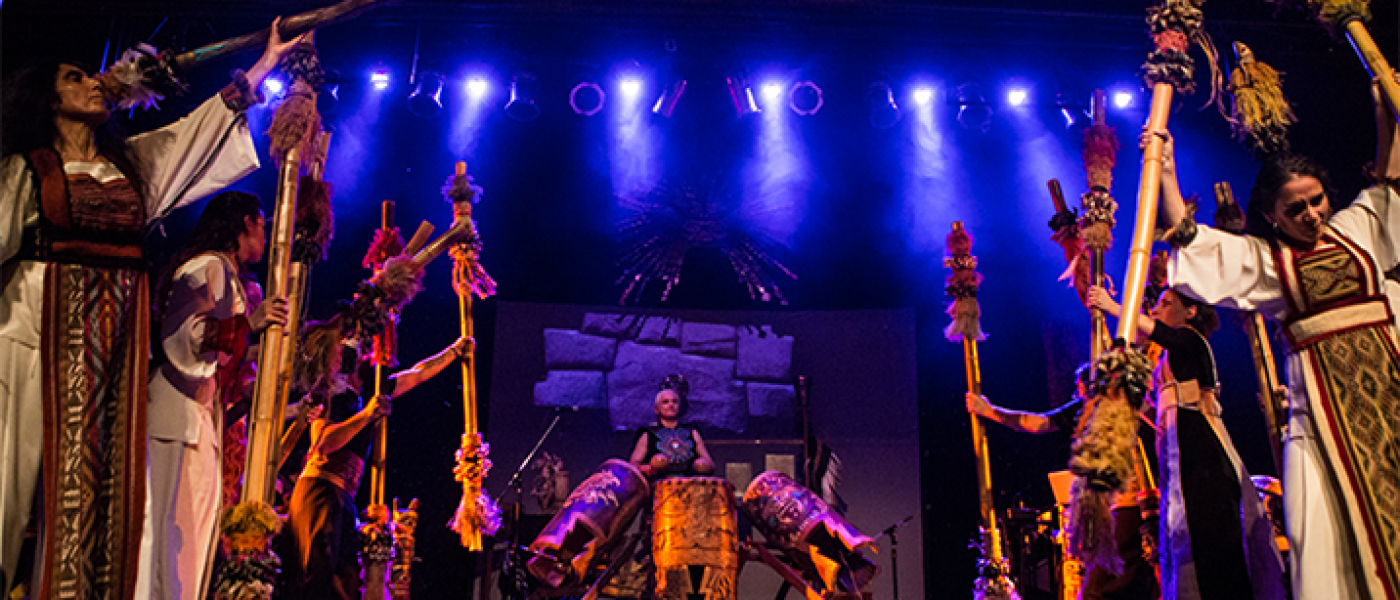
The Orchestra of Indigenous Instruments and New Technologies (OIANT) is the core of the academic-artistic Model founded by Maestro Iglesias Rossi (President of the Argentine National Music Council) and Susana Ferreres at the National University of Argentina at Tres de Febrero.
The Model of the Orchestra has received the Musical Rights Award of the UNESCO International Music Council during the World Forum on Music for: “being an inspiring Program which recovers and gives artistic life to indigenous musical instruments, the majority of them long forgotten, at the same time that it develops research, composition, university Diplomas, community courses, concerts and a pedagogical model for all levels”. https://youtu.be/yJFep16G20o
The Music of the Orchestra was selected to be preserved for 1000 years in the Global Music Vault of the North Pole that "protects the future of music by storing fundamental music of the past” through the new Project Silica by Microsoft: NewScientist Article + International Music Council News
The National Institute of Indigenous Affairs awarded the Orchestra "for their commitment as communicators of indigenous music and culture" and the National Classical Radio conferred the Orchestra its Prize for “Best Classical Ensemble 2022”.
The National Film Institute of Argentina released in 2022 the Documentary MUSIC FOR AN ANCESTRAL FUTURE dedicated to the work by the Orchestra: Offcial Trailer of the Film
"This is an initiatic journey together from the research of Prehispanic Codex in order to reconstruct the lost ancient instruments to their combination with new technologies and finally to the concerts of the Orchestra around the world that are authentic rituals on stage". LA VANGUARDIA Newspaper (Spain)
“This marvelous documentary shows the audacity of challenging the prevailing canons of musical culture”. Adolfo Pérez Esquivel, Nobel Peace Prize Laureate 1980
The MERCOSUR Parliament declared about this Project: "This whole research and creation Model is a unique project in the world and attempts to approach knowledge integrally, crossing indigenous instruments with new technologies, academic learning with artistic creation, the theoretical with the practical, modern knowledge with ancient knowledge, as well as promoting an idea of the work that brings it closer to a ritualistic and celebratory conception of music".
The Orchestra performed the Opening Ceremony for the 500 Presidents of National Universities of the Americas at the Higher Education Conference 2018 organized by the UNESCO International Institute in the largest cover Stadium of Latinamerica: https://youtu.be/omEBD1pbiFc
The same year (and for the first time in History) the Orchestra premiered a complete Program for Indigenous Instruments and Symphony Orchestra, performed with the RadioTV Slovenia Symphony Orchestra as Opening of the Imago Slovenia Festival of the Medieval City of Ljubljana and broadcasted live for the European Broadcasting Union: www.youtube.com/watch?v=gD9iEiFRhWE
The Orchestra has toured extensively around the world: Festival Berlioz (Paris), World Music Days (Hong Kong), Indonesia Art Summit (Jakarta), Bay of Islands Festival (New Zealand), Latitude 35° South Festival (South Africa), Cervantino International Festival (Mexico), Bibliotheca of Alexandria (Egypt), Festival of the Peoples from the Deserts (Sahara Desert), Festival Messiaen (France), Re ections Festival (Singapore), International Percussion Festival (Puerto Rico), International Festival Leo Brouwer (Cuba), New Zealand National Museum, International Music Festival of Bariloche (Argentine Patagonia), Conservatoire National Supérieur de Musique et de Danse de Paris (France), Djoua Festival (Algeria), Festival Ad Libitum (Poland), Porta World Music Festival (Latvia), Eesti Concert Season (Tallinn, Estonia) and Teatro Colón (Argentine), among others:
______________________________________________________________________________
About the Conductor:
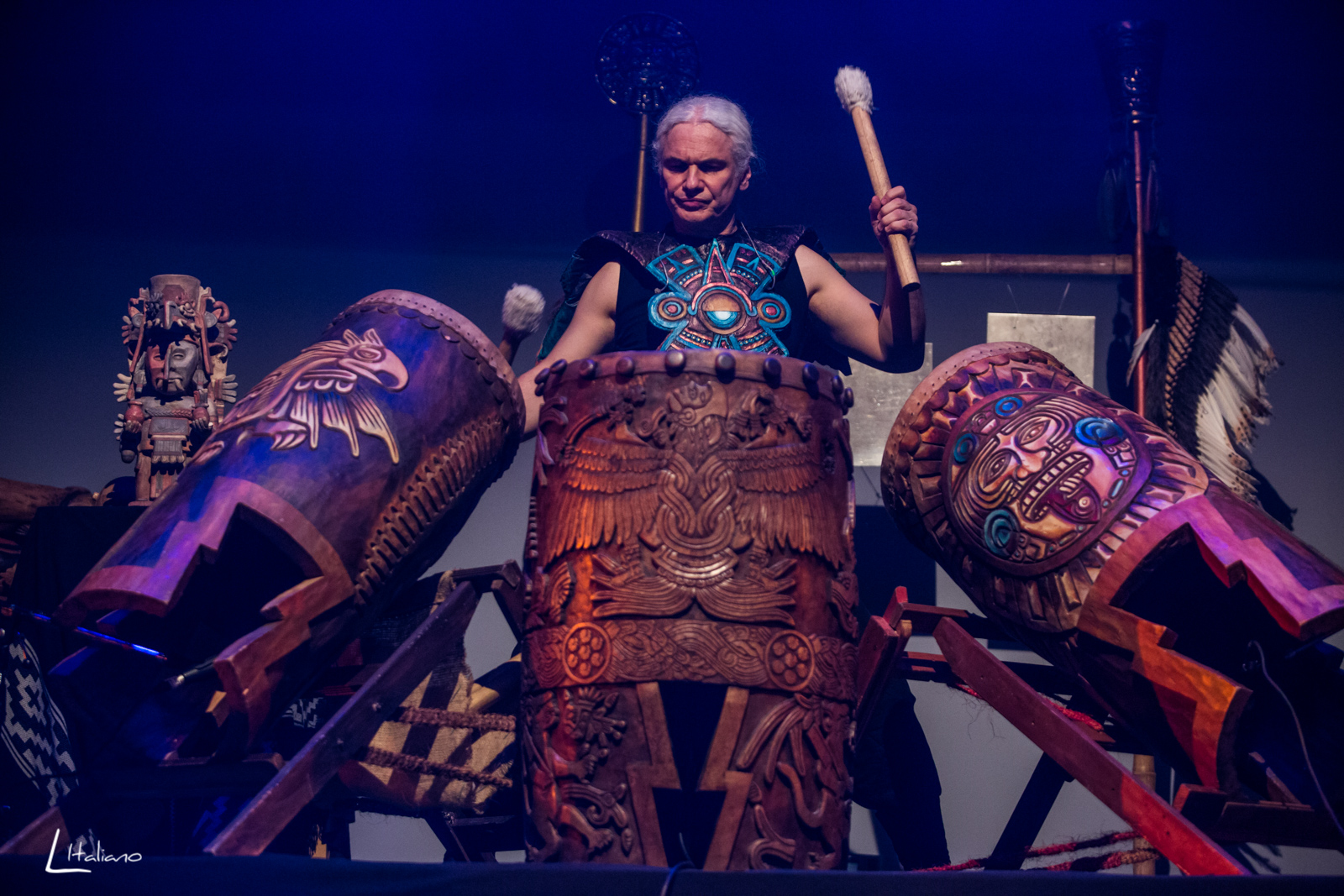
Alejandro Iglesias Rossi
:
“Iglesias Rossi is an artist who belongs to his time as regards to musical language, but whose search is closer to that of the medieval mystic path than to the end of the 20th century. His works, that show local color through their texts and sound material, speak about his faithfulness to Latin American roots. His apocalyptic vision produces a tremendous tension that makes it impossible not to be overwhelmed by it”. DICTIONARY OF SPANISH AND HISPANO-AMERICAN MUSIC, Instituto Complutense de Ciencias Musicales, Spain 1999.
Maestro John Cage wrote and dedicated the following Poem (Mesostic) to him in 1988:
Video Hommage on his work at the International Rostrum of Composers:
Alejandro Iglesias Rossi is the President of the Argentine National Music Council.
He is the only composer in History having received the two main musical Awards of the UNESCO: the First Prize of the International Rostrum of Composers of the UNESCO (Paris 1985) for his work Ancestral Rites of a Forgotten Culture considered “a masterwork of the XX century” by the International Music Council as well as the First Prize of the International Rostrum of Electroacoustic Music of the UNESCO (Amsterdam 1996) for his work Angelus.
The City of Buenos Aires awarded him its Musical Prize in 1991.
His works have been performed throughout the world at the Carnegie Hall, Centre Georges Pompidou, Lincoln Center, Concertgebouw of Amsterdam, Queen Elizabeth Hall of London, Warsaw Philharmonic, Oslo Konserthus, Hong Kong City Hall, Teatro Colón, among others.
As a conductor, he founded the Orchestra of Indigenous Instruments and New Technologies (which presents in concert the largest collection of native instruments of the Americas in the world) and toured extensively the world conducting it.
As a music educator he created the Master Degree in Musical Creation, New Technologies and Traditional Arts as well as the Bachelor Degree in Indigenous, Classical and Popular Music of the Americas at the National University of Argentina at Tres de Febrero.
As a researcher, he has done field work in the Amazonas, the Andes, Patagonia as well as Mesoamerica and established the Center for Ethnomusicology and Creation in Traditional and Avant-Garde Arts.
______________________________________________________________________________
About the Director of Visual and Scenic Art:
Susana Ferreres

“The whole Hall was astonished by the interpretation of Susana Ferreres, who transformed the work Lonquén in a rite of musical sacrifice". LATVIAN NATIONAL RADIO - November 23, 2006
“Lonquén begins with the mournful words of the breathtakingly talented Susana Ferreres. Her vocals increase in intensity as the barrage of instruments roar around her, reaching a painful poignant crescendo”. THE JAKARTA POST - Indonesia - November 19, 2007
As a musician, she studied violoncello, voice and composition in Argentina, USA and France and received her Degree in Musicology at the Paris University. As Voice Soloist of the Orchestra of Indigenous Instruments and New Technologies she has toured extensively throughout the world.
She is the Head of both the Lutherie and Sculpture-making Ateliers of the Orchestra. She was trained as an iconographer learning the Native Iconography Arts from Masters of the Spiritual Tradition of the Americas.
She is the Vice-Head of the Center for Ethnomusicology and Creation in Traditional and Avant - Garde Arts and created the Physical Architecture Course of the Master Degree in Musical Creation, New Technologies and Traditional Arts as well as the Escenic & Corporal Course of the Bachelor Degree in Indigenous, Classical and Popular Music of the Americas at the National University of Argentina at Tres de Febrero.
______________________________________________________________________________
HIGHLIGHTS